
Introduction
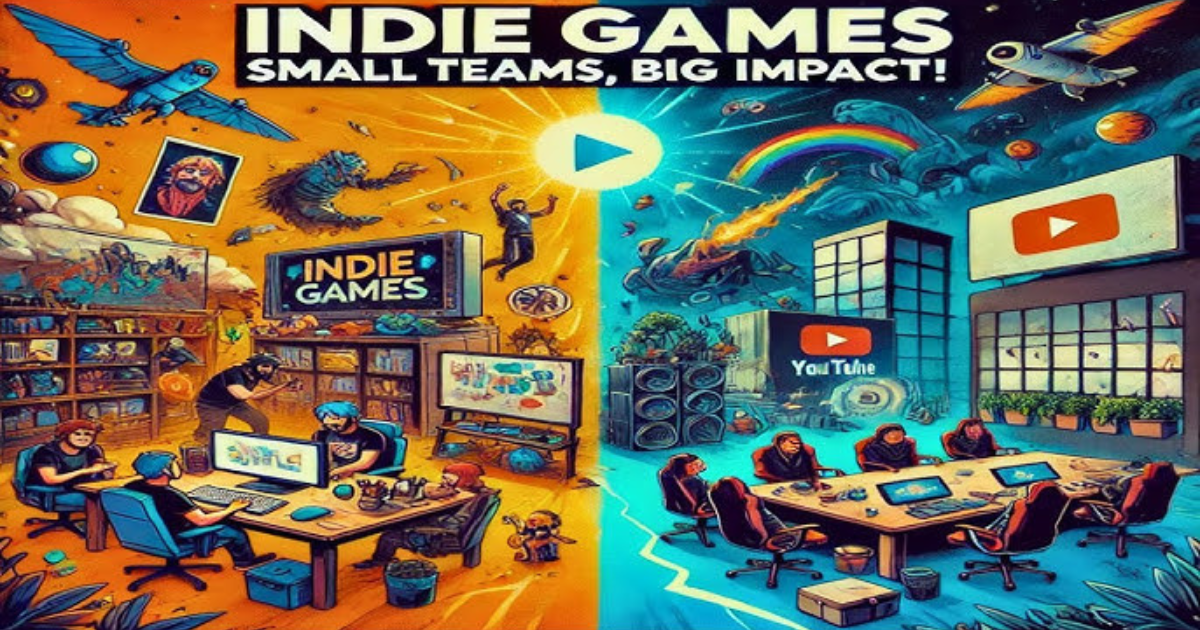
In a world dominated by billion-dollar studios and blockbuster franchises, indie games have quietly—and powerfully—redefined what gaming can be. These small, independent projects have become a driving force of innovation, creativity, and emotional storytelling. Titles like Hades, Celeste, and Hollow Knight have proven that passion, vision, and originality can outshine even the flashiest AAA productions.
The Birth of Indie Gaming
The indie gaming movement took off in the late 2000s, powered by digital distribution platforms such as Steam and Xbox Live Arcade. Before this era, independent developers struggled to publish their games without major studio backing. But once digital storefronts opened access to global audiences, the playing field began to level.
Indie games thrived because they broke away from the conventions of mainstream gaming. While big studios focused on sequels, realism, and massive budgets, indie developers experimented with fresh mechanics, minimalistic art styles, and unique narratives. The result? A flood of creativity that reignited players’ imaginations.
Creativity Over Capital
Unlike AAA titles, which often require teams of hundreds and millions in investment, indie games are often created by small teams—or even single individuals. This creative freedom allows developers to take risks that larger studios can’t afford to. They can tell deeply personal stories (Undertale), explore social commentary (Papers, Please), or redefine entire genres (Slay the Spire).
Indie games often emphasize gameplay innovation over graphical fidelity. By focusing on core mechanics, storytelling, and artistic expression, they deliver experiences that feel more human and emotionally engaging.
The Rise of Indie Success Stories
The success of indie games has shattered industry myths. Stardew Valley, developed by a single developer, sold millions of copies and built one of the most active gaming communities in history. Among Us became a global sensation years after release, driven purely by player word-of-mouth and streaming platforms like Twitch.
Today, even major platforms like Xbox and PlayStation highlight indie titles through programs like ID@Xbox and PlayStation Indies. The indie scene has gone from underground to mainstream—proving that innovation doesn’t require a massive budget, just vision and execution.
The Future of Indie Development
With the growth of tools like Unity, Unreal Engine, and Godot, indie game development has become more accessible than ever. Cloud gaming and subscription services are also helping indie titles reach wider audiences without traditional marketing budgets. As artificial intelligence and procedural design tools evolve, indie developers will have even more power to create ambitious projects.
Conclusion
Indie games are not just a counterpoint to mainstream gaming—they are its creative lifeblood. By prioritizing originality, emotion, and gameplay innovation, indie developers are reshaping the industry’s future. In the coming decade, expect indie games to continue leading the charge toward a more diverse, inclusive, and imaginative gaming world.