
Introduction
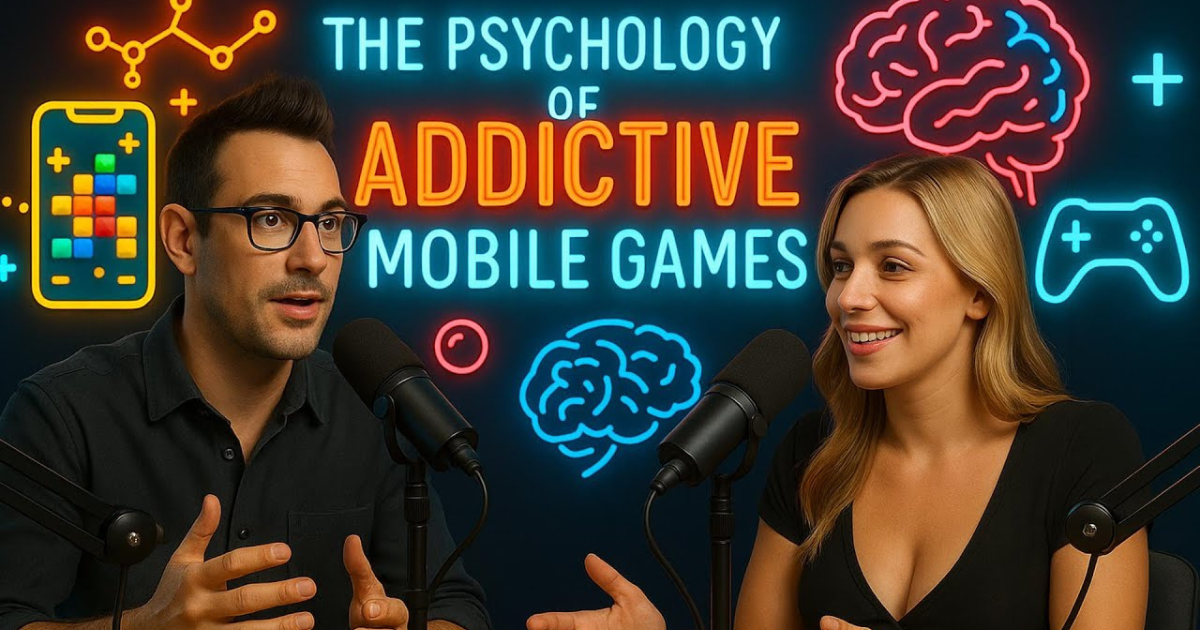
Why do millions of people spend hours matching candies, building empires, or opening loot boxes on their phones? Mobile games have mastered the art of keeping players engaged, blending clever design with deep psychological triggers. From reward loops to social mechanics, mobile game developers have turned human behavior into a science.
The Science of Rewards and Dopamine
At the core of mobile game addiction lies the reward system. Games like Clash Royale and Candy Crush use small, frequent rewards to release dopamine—the brain’s “feel-good” chemical. Each completed level or unlocked reward gives a sense of achievement, encouraging players to keep playing for the next hit of satisfaction.
These games often employ variable reward schedules, the same principle used in slot machines. Players don’t know when they’ll win next, which makes every spin—or level—more exciting. This unpredictability keeps engagement high and encourages longer play sessions.
FOMO and Social Pressure
Many mobile games also leverage social mechanics to drive engagement. Daily challenges, limited-time events, and leaderboard systems trigger the fear of missing out (FOMO). Players log in regularly to avoid losing progress or falling behind friends.
Titles like Clash of Clans and Mobile Legends use clan systems to create social bonds. When players feel part of a community, leaving the game becomes harder. Developers design these mechanics not just for fun—but for retention.
Monetization and Microtransactions
The “free-to-play” model revolutionized mobile gaming but also introduced microtransactions. Instead of paying upfront, players can buy optional upgrades, skins, or energy boosts. These purchases are often strategically placed after frustrating moments—when players are most tempted to spend to continue progressing.
While this system has been criticized for encouraging impulsive spending, ethical design trends are emerging. Some developers now prioritize fair monetization, ensuring players can enjoy the full experience without excessive paywalls.
Balancing Fun and Fairness
There’s a fine line between engagement and addiction. The best mobile games respect players’ time and offer meaningful progression rather than endless grind. Titles like Monument Valley and Alto’s Odyssey demonstrate that games can be relaxing, satisfying, and beautiful—without manipulative tactics.
Conclusion
The psychology behind addictive mobile games is both fascinating and complex. By understanding how our brains respond to rewards, challenges, and social interactions, developers can create experiences that entertain without exploiting. The future of mobile gaming lies not just in keeping players hooked—but in keeping them happy.